Did you mean:
Chromatics22 Results for : chromaticism
-
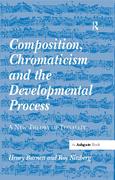
Composition Chromaticism and the Developmental Process
Composition Chromaticism and the Developmental Process - A New Theory of Tonality: ab 48.99 €- Shop: ebook.de
- Price: 48.99 EUR excl. shipping
-
Cendrillon
With its combination of enchanting love story and broad, burlesque comedy, Cendrillon is one of the great operatic fairy tales -- a Cinderella that looks back to Charles Perrault's original story in all its richness and ambiguity. Massenet's sensuous Belle Époque fairy tale is gilded with lavish orchestral textures and glittering vocal writing, drawing on everything from Baroque dances to Wagner-inspired chromaticism, to bring its story to colourful life, conjuring a world of infinite musical and emotional variety.- Shop: odax
- Price: 25.43 EUR excl. shipping
-
Cendrillon
With its combination of enchanting love story and broad, burlesque comedy, Cendrillon is one of the great operatic fairy tales -- a Cinderella that looks back to Charles Perrault's original story in all its richness and ambiguity. Massenet's sensuous Belle Époque fairy tale is gilded with lavish orchestral textures and glittering vocal writing, drawing on everything from Baroque dances to Wagner-inspired chromaticism, to bring its story to colourful life, conjuring a world of infinite musical and emotional variety.- Shop: odax
- Price: 29.87 EUR excl. shipping
-
Dante/Cantos Populares/+
Nancy Fabiola Herrera (Mezzosopran) - Orquesta Filarmónica de Gran Canaria - Adrian Leaper (Dir) // "A simmering first recording of Granados' luscious Dante and strong performances of Goyescas and Piezas, all vividly recorded. Dante is a find, a two-part symphonic poem, the first section not quite Tchaikovskian, using luscious post-Wagnerian chromaticism which even brings voluptuous hints of Scriabin and early Schoenberg ..." (Gramophone)- Shop: odax
- Price: 8.47 EUR excl. shipping
-
Harp Concertos
This disc explores that rarity of the classical repertoire, the harp concerto. The musical characteristics of the harp can provide somewhat of a challenge for the composer if writing a concerto for the instrument, but this disc boasts two wonderful examples that show seemingly endless possibilities.Frenchman François-Adrien Boieldieu (1775--1834) was probably best-known for his 40 operas, but after developing a close friendship with Sébastien Érard, the piano maker -- who was investigating and implementing improvements to the harp mechanism -- Boieldieu began to write pieces for the harp. With the lyricism of the instrument showcased in the second movement Andante, over slow-moving strings, and fast finger-work dominating the Allegro agitato finale, Boieldieu's concerto stands in marked contrast to that of Alberta Ginastera's. Here, after a fiery, almost aggressive opening few bars, the music gradually progresses towards the eerie chromaticism in the second movement. An extended virtuosic solo cadenza then marks the beginning of the finale, in which a series of tense chords hail the abrupt ending of the piece.The concertos are performed by Jutta Zoff, who was at the peak of her glittering career at the time of recording. The German harpist had been a favourite soloist of the Staatskapelle Dresden since 1967 and enjoyed tours of Europe, the USA and the Middle East. The orchestra is conducted by Siegfried Kurz.- Shop: odax
- Price: 11.30 EUR excl. shipping
-
Harmonx
Harmonx Program Notes: Renaissance Man reflects my interest in the polyphonic music of the 15th and 16th centuries in Europe and effectively demonstrates the contrapuntal possibilities of overtone singing. Notice the apparent independence of the two parts and the use of canonic imitation throughout the work. The second section begins with a strict canon in which the overtone line follows the fundamental line at four beats separation and transposed up a fifth. Midnight is built on a six-note scale. The missing note is the third scale degree, the one that determines whether a scale is major or minor in quality. The title comes from the prescribed time of day for performing Raga Chapghantarava, an Indian raga that employs the same scale. Yokyoku is the Japanese term for vocal music, but the inspiration for this piece comes from music for shakuhachi, the Japanese bamboo flute. A typical Japanese five-note scale is used, and both fundamental and overtone lines are restricted to those five pitches. This limitation creates a stark, austere effect appropriate to a Japanese-influenced aesthetic. The Blues is a two-part realization of the traditional twelve-bar blues progression with a little bit of swing. Tuvan Groovin' was inspired by recordings of contemporary Tuvan throatsingers such as the group Huun-Huur Tu. Several Tuvan vocal techniques are employed, in particular the dotted-rhythm figure, suggestive of horses galloping. Fantasy features harmonic and melodic approaches reminiscent of late 19th-century romantic music, including distantly related chords and keys and the pervasive use of chromaticism. Ballad begins with a simple, folk-like tune, but as the piece progresses, the texture becomes increasingly fragmented and pointillistic while retaining the strict modal harmony. Harmonic Overtures is a work in a more experimental vein. Additional digital effects are employed in the middle of the piece to create complex textures. Variations presents a twist on the traditional set of variations. Instead of developing a given melody, the eight short movements take contrasting approaches to the idea that the overtone line be limited to four pitches (with a couple of exceptions). These four pitches can be produced as overtones on several different fundamental pitches, which provides the needed variety. The title, Goodbye Ravi, is a pun on the name of the Indian raga on which the piece is based, Raga Bhairavi. The keyboard part begins like the tanbura drone in Indian classical music, starting with a single pitch then adding one note at a time until, at the high point of the piece, a chord with all seven notes of the scale is present.- Shop: odax
- Price: 21.90 EUR excl. shipping
-
Gallery of Italian Madrigals & Motets
Notes by Dr. David Schofield copyright 1993 Josquin's El Grillo is a frottola, a forerunner of the sixteenth century Italian madrigal. These were simple three- or four-part songs in a chordal style with the melody in the soprano. They may have been performed as accompanied songs for solo voice, but their homophonic texture suggests the possibility of purely vocal performances. Arcadelt's Il bianco e dolce cigno and D. Ferrabosco's Io mi son giovinetta are typical sixteenth century Italian Madrigals, which used poetic forms of freely arranged seven and eleven syllable lines imitating Petrarch. Like the frottola before it, the early madrigal (c. 1530) was primarily homophonic, although there was considerable use of imitation between voices. Wert's Chi salira per me is a madrigal in the classic style (1550-80). Madrigals of this period were highly polyphonic and imitative, and usually written for five voices, though four and six voices were not uncommon. Care is taken to enhance the text's meaning and pronunciation through musical expression. The late madrigal (c. 1580-1620) developed into an elaborate musical form, using extremes of chromaticism, word painting, and virtuosic vocal lines to depict the text. Marenzio's Cruda Amarilli, Gesualdo's Languisco e moro, and Monteverdi's Quel augellin che canta are examples. Gastoldi's Viver lieto voglio and Lassus' Matona mia cara are balletti, a form first introduced by Gastoldi in 1591. These are written in a simple chordal style using dance rhythms, frequently with a fa la la refrain. Balletti may have served as dance music and were widely imitated in England, particularly by Morley. Sicut Cervus epitomizes Palestrina's pure and reserved polyphonic style, which became the model for much subsequent church music. Croce's O sacrum convivium and Viadana's Exultate justi in Domino are popular four-part choral works which employ dance rhythms within a homophonic texture. These songs also resemble the popular villanelli and canzonetti of the period. Lassus' Ave verum corpus is written in the style of the Venetian 'cori spezzati'. Striking word-painting is particularly evident in the setting of the text 'unda fluxit'. Imitative descending lines cascade in all the voices. The six parts split into two-, three- and four-voice ensembles to contrast the tutti, creating the effect of a double chorus. Gasparini's Adoramus te, Christe and Lotti's Crucifixus are written in the 'stile antico', the old style of Palestrina. However, the striking chromaticism and abundant dissonance, while offering poignant word painting of Christ's passion, reveal a more modern ear at work, as do the driving tonal progressions. But within this tonal context, both composers succeed at recreating the subtle and reserved polyphonic style of the sixteenth century. The Members on this album Director: Erik-Peter Mortensen Associate Conductor: Dr. David Schofield Soprano i: Sandia Ang, Cathlee Ellis Soprano II: Peggey Farley, Elizabeth Henrickson-Farnum Mezzo-Soprano: Melissa Fogarty Alto: Sally Elliot, Elaine Tokunaga Tenor i: Colin Bird, Louis Shafer Tenor II: Gregory Davidson, Arthur Krieck Baritone: Tod Mijanovich, Erik-Peter Mortensen Bass: Charles Grey Jr., Michael Orzechowski Track Texts and Translations 1. LANGUISCO E MORO: C Gesualdo (1560-c.1613) Languisco e moro, ahi, cruda! Ma tu, fera cagion de la mia sorte, Deh, per pieta, consola Si dolorosa morte D'una lagrima sola, Onde dica per fin del mio languire: 'Or che pietosa sei, dolce e'l morire'. I languish and die, ah cruel one! But you, savage cause of my fate, Ah, for pity's sake, comfort So painful a death With a single tear, Whence may be said at the end of my languishing: 'Now that you be merciful, sweet it is to die.' 2. EL GRILLO: J. Desprez (1440-1521) El grillo e buon cantore che tiene longo verso. Dale, beve grillo, canta. Ma no fa come gli altri uccelli Come li han cantato un poco Van' de fatto in altro loco. Sempre el grillo sta pur saldo. Quando la maggior el caldo Alhor canta sol per amore. The cricket is a fine singer who sustains a long note. Be happy, drink cricket, sing. But he is not like other birds Who sing a little Flying off to another place. The cricket always stands firm. When the weather is hottest He sings only for love. 3. IL BIANCO E DOLCE CIGNO: J. Arcadelt (c. 1505-1568) Il bianco e dolce cigno cantando more, et io Piangendo giungo al fin del viver mio. Strano e diversa sorte ch'ei more sconsolato, Et io moro beato. Morte, che nel morire Mi empie di gioia tutto e di desire. Se nel morir altro dolor non sento Di mille morte il di sarei contento. The white and gentle swan dies singing, and I Weeping reach the end of my life. What strange and diverse fate that he dies unconsoled, And I die blessed. Death, which in dying Fills me full of joy and desire. If in dying no other pain I feel With a thousand deaths a day I would be content. 4. MATONA MIA CARA: Orlando di Lasso (1532-1594) (Broken Italian spoken by German Soldier) Matona mia cara, mi follere canzon cantar sotto finestra, Lantze buon compagnon. Don don don diri diri don don don. Ti prego m'ascoltare che mi cantar de bon, E mi ti foller bene come greco e capo, etc.Com' andar a le cazze, calzar con le falcon Mi ti portar becazze, grasse come rognone, etc. Se mi non super dire tante belle radon, Petrarcha mi non saper, ne fonte d'Helicon, etc. Se ti mi foller bene mi non esser poltron, Mi ficar tutta notte, urtar come monton, etc. My dalingk voman, I vant a songk to singk unter ze vindow. I'm Lantzer und gut companion. Dongk dongk donk derry derry dongk dongk dongk. I vant you zu listen me, zints I singk zo gut. Und I vant you like ze Greek vants chicken, etc. Ven I go ze huntingk mit ze falcon I bringk you back voodcock fat like ze kidney, etc. I speak nicht zo gut zints I dunno ze Petrark oder ze faunten of yooth, etc. If you like me gut, me no lazy soldya, Me singk to you allk nigkht longk, last longa zan ze maunten-gaut, etc. 5. CHI SALIRA PER ME: G. de Wert (1535-1596) Chi salira per me, Madonn', in cielo A riportam' il mio perdut' ingegno Che, poi ch'usci da' bei vostr' occhi il telo Che'l cor mi fiss', ognor perdendo vegno? Ne di tanta jattura mi querelo, Pur che non cresca, ma stia a questo segno, Ch'io dubito, se piu se va scemando, Che stolto me n'andro pel mond' errando. Who will ascend for me, my Lady, to heaven To bring back my lost reason Which, since departed from your beautiful eyes the dart That my heart pierced, every hour I am losing? Nor of such a loss do I complain, Provided it increases not, but remains at this degree, For I doubt, if more it diminishes, That foolish I shall go through the world wandering. 6. VIVER LIETO VOGLIO: G. Gastoldi (1556-1622) 1. Viver lieto voglio Senza alcun cordoglio. La la. Tu puoi restar, Amor, Di saettarmi il cot, Spendi i pungenti strali Ove non paiian frali, Nulla ti stimo o poco E di te prendo gioco. La la. 2. Bacco adoro et amo E'l liquor suo bramo. La la. E i fammi allegro star E i m'e diletto car, Con lui e notte e giorno Io volontier soggiorno, Lui sempre lieto invoco E di te prendo gioco. La la. 1. To live happily I wish Without any deep sorrow. La la. You can cease, Love, From shooting my heart, Make use of your sharp arrows Where they may not seem weak, I have little or now esteem for you And I make fun of you. La la. 2. Bacchus I adore and love And I yearn for his liquor. La la. And he makes me happy And is to me dear delight, With him both night and day I willingly stay, To him always happily I call, And I make fun of you (Love). La la. 7. IO MI SON GIOVINETTA: D. Ferrabosco (1513-1574) Io mi son giovinetta, e volontieri M'allero e canto en la stagion novella, Merze d'amore e de' dolci pensieri. Io vo pe' verdi prati riguardando I bianchi fiori, ei vermigli, e' gialli, Le rose in su le spine, ei bianchi gigli, E tutti quanti gli vo somiglando Al viso di colui ch'amandomi Mi presa e terra sempre. I am a young lady, and gladly Rejoice and sing- Shop: odax
- Price: 39.56 EUR excl. shipping
-
Diamonds Uncovered
Well-known American composer David Diamond received many accolades for his compositions, which include works in such diverse genres such as symphonies, concerti, chamber works, and vocal compositions. This sonata was written for Jean-Pierre Rampal (1922-2000) on the occasion of his 65th birthday and remains unpublished today. Frequently changing meters and a lyrical dissonance are elements of the characteristic compositional style that permeate the work. The caption for the fourth movement both illustrates Diamond's sense of humor and acknowledges the moments of disjunction between the two instruments, the piano and flute do eventually reunite to complete the work with a resounding flourish. A student of Nadia Boulanger and Vittorio Giannini, Thomas Pasatieri received the first doctorate awarded by the Julliard School of Music at age nineteen. Best known for his vocal and operatic compositions, Pasatieri writes in a musical style highlighted by lyrical and tonal melodies. A 1986 commission by the Verdehr Trio led to the composition of a number of instrumental works, including this work for flute and piano, written in honor of the fiftieth anniversary of the Music Academy of the West. The use of whole tone scales and gentle chromaticism in the first movement, a lullaby-like rocking triple meter in the second, and a romantic, atmospheric flute melody in the Allegro vivace all combine to create a wholly enjoyable soundworld not unrelated to the many film scores on which Pasatieri has worked. Emma Lou Diemer wrote her flute sonata in 1958, while studying for her Ph.D. in composition under Bernard Rogers. Diemer acknowledges a specific connection to Johann Sebastian Bach's flute sonata in E-flat major (BWV 1031, 1730-34), which also features a Siciliano as the second of it's three movements. Diemer writes, "The Bachian interplay and equality of the writing for flute and keyboard was uppermost in my mind, and also a lyricism and tonally uncomplicated style - though moving quickly through changing tonalities." The first two movements have neoclassic ternary formal structures, while the third is in sonata form with a fughetta in the development section. It was dedicated to Mark Thomas, for whom Diemer also wrote a flute concerto. This is the first recording of this work. Denis Bédard, an actively performing French Canadian composer and organist, wrote this flute and piano work while teaching at the Conservatoire de musique de Québec. The work was premiered by Barbara Todd-Simard, who also performed it on CBC radio. Bédard describes the work as having been written in his "usual chamber music style, which is very 'French'." Compositionally, the work is at times influenced by the style of Francis Poulenc, and the third movement pays an unmistakable debt to the first Gymnopedie (1888) by Erik Satie. The formal structures are clearly articulated and the harmonies are at times quite adventurous. Bédard acknowledges a "concern for immediate communication with as vast a public as possible" as one of his principal aesthetic goals, this enjoyable and challenging piece undoubtedly fulfills that ambition. Julliard faculty member Samuel Zyman is one of the leading Mexican composers today, with an extensive catalogue of works including symphonies, concerti, chamber works, and the film score to The Other Conquest. This sonata, regarded as a major repertory piece and frequently performed worldwide, features technically demanding writing with particularly appealing rhythmic power and drive. Composed at the bequest of Mexican flutist Marisa Canales who premiered the work in 1993 with Argentinian pianist Ana Maria Tradatti, the work was published four years later. Zyman's aesthetic concept for this piece was that it be "exciting, intense, and emotional," he pairs a contemporary sound with formal structures that bow to the western tradition and a true partnership between the two instruments. With jazz-inspired syncopations, imitative counterpoint between the flute and piano, and an urgently-paced third movement he envisions as "reckless and insane," Zyman's energetic composition is a favorite for many flutists. - Laura Moore Pruett, Ph.D.- Shop: odax
- Price: 24.46 EUR excl. shipping
-
Lieder
When one thinks of Richard Wagner, it is easy to imagine the passion, the soaring melodies and the sheer power of the music written by this revolutionary in the world of 19th-century opera. But the fact is that Wagner could also portray these elements on a much smaller scale and was adept at capturing the more intimate subtleties of the genre known as the Lied. This special collection brings together Wagner's works for voice and piano.Among the works that appear in the collection are the Wesendonck-Lieder - a setting of five poems by Mathilde Wesendonck - two of which, 'Träume' and 'Im Treibhaus', Wagner describes as studies for Tristan and Isolde, one of his most celebrated operas. These five lieder combine a use of chromaticism, expression and restless, wave-like phrases that have come to be associated with much of the composer's oeuvre. The disc also boasts an Italian version of the work, with text by Arrigo Boito. Also appearing in the collection are the famed 'Gretchen am Spinnrade' and 'Melodram' - the final two works of the Sieben Compositionen zu Goethes Faust - the complex 'Dors, mon enfant' and further works with texts by writers such as Victor Hugo, Georg Sheurlin and Pierre de Ronsard. Each of these works showcases Wagner's immense talent at the portrayal of emotion through song.Praised by the New York Times as being 'a fine dramatic soprano', Michela Sburlati is a critically acclaimed singer who has performed in operas all over the world. Recent engagements include the role of Chrysothemis in Richard Strauss's Elektra (Erl Festival, Austria) and the title role in Tosca at the Kazan Opera (Russia). She won the 'Poggi' Award as critics' and audience's choice in 2011, teaches lyric singing at the Conservatoire in Perugia and collaborates with the Lyric Opera Centre in Shanghai. Sburlati is accompanied by renowned pianist Marco Scolastra.Other information:- The Wagner year 2013 brought us a wealth of new and re-issues of his greatest operas, therefore this new recording of his songs might be seen as an elegant and refreshing "encore": small-scale Lieder, of an intimate nature, but often expressing in just a few minutes as much as in a whole opera scene.- Included are the famous Wesendonck Lieder, in the original German version and in an Italian translation by Boito (Verdi's librettist), Gretchen am Spinnrade, Mignonne and several other little gems.- Sung by the Italian Michela Sburlati, "a fine dramatic soprano" (New York Times), accompanied by maestro Marco Scolastra.- Contains extensive liner notes on the works and performer biographies.- Contains sung texts in the sung language.- Shop: odax
- Price: 10.76 EUR excl. shipping
-
Simonacci, M: Patterns In A Chromatic Field-Music For Cello
American composer Morton Feldman is best known for being a founding member of the New York School, a group of musicians and artists that pursued an experimental style of composition in the 1950s and 60s. His works for cello and piano are included in full in this special collection. Among the composer's earlier works is the Two Pieces (1948), characterised by its emphatic chromaticism, in keeping with the avant-garde style of the era. After having met John Cage in 1950, and forming the New York School, there was a change in Feldman's compositional style. Among the works from this era are several indeterminate works, such as Projection 1 and Intersection 4. The final stage in Feldman's compositional career dates from the post-1970s, when Feldman had moved from New York to take up a professorship at the University of Buffalo. Compositions from this time include Patterns in a chromatic field, a work full of chains of melodic cells repeated with subtle variations in pitch or melody, which relies on the impulses of the performer.The works are performed here by the Italian musicians Marco Simonacci (cello), Giancarlo Simonacci (piano), Fabio Frapparelli (horn), and Paola Ronchetti and Ilaria Severo (sopranos), Each has an international reputation as a performer and recording artist.Other information:- Recorded in 2012.- Morton Feldman is without doubt one of the most remarkable and influential composers of the second half of 20th century America. His experimental works (where the course of a composition is often open to multiple interpretations) are based on melodic cells which are endlessly and subtly varied and developed in immensely long and slow moving structures (sometimes of several hours), producing a hallucinatory effect on the audience. Especially over the last few years Feldman became an iconic cult figure, an antidote against modern time's stress.- Excellent performances by father and son Simonacci, who proved their innate feeling for the idiom in their many recordings of the works of John Cage on Brilliant Classics.- Contains liner notes on the composer and works.- Contains performer biographies.- Shop: odax
- Price: 26.24 EUR excl. shipping


