27 Results for : prescience
-

Parable of the Sower
The extraordinary, prescient NEW YORK TIMES-bestselling novel.'If there is one thing scarier than a dystopian novel about the future, it's one written in the past that has already begun to come true. This is what makes Parable of the Sower even more impressive than it was when first published' GLORIA STEINEM'Unnervingly prescient and wise' YAA GYASI--We are coming apart. We're a rope, breaking, a single strand at a time.America is a place of chaos, where violence rules and only the rich and powerful are safe. Lauren Olamina, a young woman with the extraordinary power to feel the pain of others as her own, records everything she sees of this broken world in her journal.Then, one terrible night, everything alters beyond recognition, and Lauren must make her voice heard for the sake of those she loves. Soon, her vision becomes reality and her dreams of a better way to live gain the power to change humanity forever.PRAISE FOR OCTAVIA E. BUTLER, THE NEW YORK TIMES BESTSELLING AUTHOR'In the ongoing contest over which dystopian classic is most applicable to our time... for sheer peculiar prescience, Butler's novel may be unmatched' NEW YORKER'Butler's prose, always pared back to the bone, delineates the painful paradoxes of metamorphosis with compelling precision' GUARDIAN'Octavia Butler was a visionary' VIOLA DAVIS'One of the most significant literary artists of the twentieth century. One cannot exaggerate the impact she has had' JUNOT DIAZ'An icon of the Afrofuturism world, envisioning literary realms that placed black characters front and center' VANITY FAIR'Butler writes with such a familiarity that the alien is welcome and intriguing. She really artfully exposes our human impulse to self-destruct' LUPITA NYONG'O- Shop: buecher
- Price: 9.99 EUR excl. shipping
-

Bad Money: The Inexcusable Failure of American Finance: An Update to Bad Money , Hörbuch, Digital, ungekürzt, 566min
The best-selling author reveals how the U.S. financial sector has hijacked our economy and put America's global future at risk.In American Theocracy, Kevin Phillips warned us of the perilous interaction of debt, financial recklessness, and the increasing cost of scarce oil. The current housing and mortgage debacle is proof once more of Phillips's prescience, and only the first harbinger of a national crisis. In Bad Money, Phillips describes the consequences of our misguided economic policies, our mounting debt, our collapsing housing market, our threatened oil, and the end of American domination of world markets. America's current challenges (and failures) run striking parallels to the decline of previous leading world economic powers - especially the Dutch and British. Global overreach, worn-out politics, excessive debt, and exhausted energy regimes are all chilling signals that the United States is crumbling as the world superpower."Bad money" refers to a new phenomenon in wayward megafinance - the emergence of a U.S. economy that is globally dependent and dominated by hubris-driven financial services. Also "bad" are the risk miscalculations and strategic abuses of new multitrillion-dollar products such as asset-backed securities and the lure of buccaneering vehicles like hedge funds. Finally, the U.S. dollar has been turned into bad money as it has weakened and become vulnerable to the world's other currencies. In all these ways, "bad" finance has failed the American people and pointed U.S. capitalism toward a global crisis. Bad Money is the perfect follow-up to Phillips's last book, whose dire warnings are now proving frighteningly accurate. ungekürzt. Language: English. Narrator: Scott Brick. Audio sample: https://samples.audible.de/bk/peng/001160/bk_peng_001160_sample.mp3. Digital audiobook in aax.- Shop: Audible
- Price: 9.95 EUR excl. shipping
-

Granta 123: Best of Young British Novelists 4 , Hörbuch, Digital, ungekürzt, 704min
Every 10 years, Granta Magazine dedicates a special issue celebrating the 20 best British novelists under the age of 40. Historically, the judges have chosen with remarkable prescience, accurately predicting the authors who will craft the future of British fiction. Barker, Barnes, Hollinghurst, Ishiguro, Mitchell, Rushdie, Smith, Tremain, Winterson - long before they were household names they were Granta Best of Young British Novelists. To borrow from The Observer, this is "a list that sets the literary agenda for a generation". Audible invited all these young novelists to read their work - some of them did, and some of them chose to have their stories professionally narrated - and the result is an exciting blend of literary talent and spoken-word: These distinctive voices and the sense of place that permeate every story create a listening experience you will not soon forget. Now in audio for the first time, we present the voices of the next generation. Introduction by John Freeman, read by John Freeman Author introductions read by Glen McCready "Vipers" by Kamila Shamsie, read by Kamila Shamsie "Glow" by Ned Beauman, read by Ned Beauman "Anwar Gets Everything" by Tahmima Anam, read by Sartaj Garewal "Soon and in Our Days" by Naomi Alderman, read by Naomi Alderman "Filsan" by Nadifa Mohamed, read by Dami Olukoya "Europa" by David Szalay, read by David Thorpe "After the Hedland" by Evie Wyld, read by Amelia Cormack "Driver" by Taiye Selasi, read by Taiye Selasi "Slow Motion" by Adam Thirlwell, read by Adam Thirlwell & Sartaj Garewal "The End of Endings" by Steven Hall, read by Adam Sims "A World Intact" by Adam Foulds, read by Adam Foulds "You Don’t Have To Live Like This" by Benjamin Markovits, read by Benjamin Markovits "Tomorrow" by Joanna Kavenna, read by Joanna Kavenn ungekürzt. Language: English. Narrator: John Freeman. Audio sample: https://samples.audible.de/bk/adbl/012715/bk_adbl_012715_sample.mp3. Digital audiobook in aax.- Shop: Audible
- Price: 9.95 EUR excl. shipping
-

No End Save Victory: How FDR Led the Nation into War , Hörbuch, Digital, ungekürzt, 961min
While Franklin Delano Roosevelt's first hundred days may be the most celebrated period of his presidency, the months before the attack on Pearl Harbor proved the most critical. Beginning as early as 1939, when Germany first attacked Poland, Roosevelt skillfully navigated a host of challenges: a reluctant population, an unprepared military, and disagreements within his cabinet to prepare the country for its inevitable confrontation with the Axis. In No End Save Victory, esteemed historian David Kaiser draws on extensive archival research to reveal the careful preparations that enabled the United States to win World War II. Alarmed by Germany and Japan's aggressive militarism, Roosevelt understood that the United States would almost certainly be drawn into the conflict raging in Europe and Asia. However, the American populace, still traumatized by memories of the First World War, was reluctant to intervene in European and Asian affairs. Even more serious was the deplorable state of the American military. In September of 1940, Roosevelt's military advisors told him that the United States would not have the arms, ammunition, or men necessary to undertake any major military operation overseas, let alone win such a fight, until April of 1942. Aided by his closest military and civilian collaborators, Roosevelt pushed a series of military expansions through Congress that nearly doubled the size of the US Navy and Army and increased production of the arms, tanks, bombers, and warships that would allow America to prevail in the coming fight. Highlighting Roosevelt's deft management of the strong personalities within his cabinet and his able navigation of the shifting tides of war, No End Save Victory is the definitive account of America's preparations for and entry into World War II. As Kaiser shows, it was Roosevelt's masterful leadership and prescience that prepared the reluctant nation to fight and gave it the tools to win. ungekürzt. Language: English. Narrator: Paul Christy. Audio sample: https://samples.audible.de/bk/adbl/022311/bk_adbl_022311_sample.mp3. Digital audiobook in aax.- Shop: Audible
- Price: 9.95 EUR excl. shipping
-

Fasting and Feasting: The Life of Visionary Food Writer Patience Gray , Hörbuch, Digital, ungekürzt, 822min
For more than 30 years, Patience Gray, author of the celebrated cookbook Honey from a Weed, lived in a remote area of Puglia in southernmost Italy. She lived without electricity, modern plumbing, or a telephone, grew much of her own food, and gathered and ate wild plants alongside her neighbors in this economically impoverished region. She was fond of saying that she wrote only for herself and her friends, yet her growing reputation brought a steady stream of international visitors to her door. This simple and isolated life she chose for herself may help explain her relative obscurity when compared to the other great food writers of her time: M. F. K. Fisher, Elizabeth David, and Julia Child. So it is not surprising that when Gray died in 2005, the BBC described her as an "almost forgotten culinary star." Yet her influence, particularly among chefs and other food writers, has had a lasting and profound effect on the way we view and celebrate good food and regional cuisines. Gray's prescience was unrivaled: She wrote about what today we would call the Slow Food movement, from foraging to eating locally, long before it became part of the cultural mainstream. Imagine if Michael Pollan or Barbara Kingsolver had spent several decades living among Italian, Greek, and Catalan peasants, recording their recipes and the significance of food and food gathering to their way of life. In Fasting and Feasting, biographer Adam Federman tells the remarkable, and until now untold, life story of Patience Gray: from her privileged and intellectual upbringing in England, to her trials as a single mother during World War II, to her career working as a designer, editor, translator, and author, and describing her travels and culinary adventures in later years. A fascinating and spirited woman, Patience Gray was very much a part of her times but very clearly ahead of them. ungekürzt. Language: English. Narrator: Naomi Frederick. Audio sample: https://samples.audible.de/bk/acx0/096761/bk_acx0_096761_sample.mp3. Digital audiobook in aax.- Shop: Audible
- Price: 9.95 EUR excl. shipping
-

The Marne: The History and Legacy of the Two Major Battles Fought Along the Marne River During World War I , Hörbuch, Digital, ungekürzt, 174min
If trench warfare was an inevitability during the war, it is only because the events leading up to the First Battle of the Marne were quite different. The armies at the beginning of the war moved quickly through the land, but the First Battle of the Marne devolved into a bloody pitched battle that led to the construction of trenches after the Germans retreated, blocked in their pursuit of Paris. When the aftermath disintegrated into a war between trenches, some Germans thought they had the upper hand since they were occupying French territory, but with fewer soldiers than the combined Allied nations and fewer resources and supplies, it was possibly only a matter of time before they were ultimately defeated.The commander of the German armies General Helmuth von Moltke allegedly said to Kaiser Wilhelm II immediately after the First Battle of the Marne, "Your Majesty, we have lost the war." Winston Churchill himself would later reference that anecdote, writing, “Whether General von Moltke actually said to the Emperor, ‘Majesty, we have lost the war’, we do not know. We know anyhow that with a prescience greater in political than in military affairs, he wrote to his wife on the night of the 9th, ‘Things have not gone well. The fighting east of Paris has not gone in our favour, and we shall have to pay for the damage we have done.’"When the United States joined the war in April 1917, it began mobilizing four million soldiers to join the war. The Central Powers knew that it would take months before the United States could land a substantial number of troops in Europe to join the fighting, and the Germans hoped to force the Allied powers to quit before the United States could make a difference. Thus, the Germans’ Spring Offensive began in March 1918, using new infantry tactics to move on the most lightly defended points of the Allied trenches. The Germans quickly obtained a breakthrough and broke the Allied lines, pushing the Allied forces back nearly ungekürzt. Language: English. Narrator: Jim Johnston. Audio sample: https://samples.audible.de/bk/acx0/214591/bk_acx0_214591_sample.mp3. Digital audiobook in aax.- Shop: Audible
- Price: 9.95 EUR excl. shipping
-
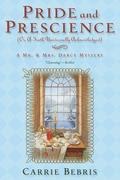
Pride and Prescience
Pride and Prescience - Or A Truth Universally Acknowledged: ab 9.99 €- Shop: ebook.de
- Price: 9.99 EUR excl. shipping