30 Results for : protestations
-

History for Kids: The Illustrated History of the Cherokee , Hörbuch, Digital, ungekürzt, 15min
We are overwhelmed! Our hearts are sickened, our utterance is paralyzed, when we reflect on the condition in which we are placed, by the audacious practices of unprincipled men, who have managed their stratagems with so much dexterity as to impose on the [g]overnment of the United States, in the face of our earnest, solemn, and reiterated protestations. (Principal Chief John Ross) In Charles River Editors' History for Kids series, your children can learn about history's most important people and events in an easy, entertaining, and educational way. The concise-but-comprehensive audiobook will keep your kid's attention all the way to the end. Tragically, the Cherokee is one of America's best-known tribes due to the trials and tribulations they suffered by being forcibly moved west along the "Trail of Tears", but that overlooks the contributions they made to American society well before the 19th century. The Cherokee began the process of assimilation into European America very early, even before the establishment of the Unites States, and by the early 19th century they were one of the "five civilized tribes". However, it is ultimately unclear what benefits "civilization" brought to the tribe. Throughout the colonial period and after the American Revolution, the Cherokee struggled to satisfy the whims and desires of American government officials and settlers, often suffering injustices after complying with their desires. Nevertheless, the Cherokee continued to endure, and after being pushed west, they rose from humble origins as refugees, new to the southeastern United States, to build themselves back up into a powerhouse both economically and militarily. ungekürzt. Language: English. Narrator: David Zarbock. Audio sample: https://samples.audible.de/bk/acx0/035241/bk_acx0_035241_sample.mp3. Digital audiobook in aax.- Shop: Audible
- Price: 9.95 EUR excl. shipping
-

Brave New World (Dramatized), Hörbuch, Digital, 60min
The CBS Radio Workshop was an experimental series of productions, subtitled "radio's distinguished series to man's imagination" that ran between 27 January 1956 and 22 September 1957. The premiere production was Brave New World, narrated by Huxley himself, with a complicated sound-effects score that evidently took a long time to construct, and comprised a ticking metronome, tom-tom beats, bubbling water, an air hose, a cow's moo, an oscillator, and three kinds of wine glasses clicking together. There was also a cast of some ten actors. What was most evident about this two-part adaptation, now available on podcast, was the vocal contrasts: between Huxley the narrator, telling the story in a cut-glass marked RP accent interspersed with occasional Americanisms ("diaper" instead of "nappy," for instance); the Controller, who spoke throughout in jovial tones, appropriate for the Brave New World of perpetual happiness; and the Savage, the representative of feeling, emotional humanity - now consigned to a reserve in darkest Mexico - whose tones became increasingly desperate as he understood how mechanized the universe had become. The Brave New World was a topsy-turvy environment, which despised institutions such as marriage and parenthood (any mention of such terms was greeted with scornful laughter), and advocated free love without passion. Everyone belonged to everyone else, and no one needed to think any more. Despite the Director's jovial protestations that this was the best of all possible worlds (shades of Voltaire's Candide), the doom-laden consequences of what had happened were suggested by Bernard Herrman's specially composed score, full of doom-laden chords, and metronome-like chimes played on the tubular bells. The adaptation was announced by the actor William Conrad - who subsequently found fame on television as the corpulent detective Cannon: at the end of the first episode he informed listeners in no uncertain terms about the Language: English. Narrator: Aldous Huxley. Audio sample: https://samples.audible.de/bk/bnpp/000065/bk_bnpp_000065_sample.mp3. Digital audiobook in aax.- Shop: Audible
- Price: 9.95 EUR excl. shipping
-

The Asylum for Wayward Victorian Girls , Hörbuch, Digital, ungekürzt, 458min
Two young women, living centuries apart, both accused of madness, communicate across time to fight a common enemy...their doctors. "It was the dog who found me." Such is the stark confession launching the harrowing scene that begins The Asylum for Wayward Victorian Girls as Emilie Autumn, a young musician on the verge of a bright career, attempts suicide by overdosing on the antipsychotics prescribed to treat her bipolar disorder. Upon being discovered, Emilie is revived and immediately incarcerated in a maximum-security psych ward, despite her protestations that she is not crazy, and can provide valid reasons for her actions if someone would only listen. Treated as a criminal, heavily medicated, and stripped of all freedoms, Emilie is denied communication with the outside world and falls prey to the unwelcome attentions of Dr. Sharp, head of the hospital's psychiatry department. As Dr. Sharp grows more predatory by the day, Emilie begins a secret diary to document her terrifying experience and to maintain her sanity in this environment that could surely drive anyone mad. But when Emilie opens her notebook to find a desperate letter from a young woman, imprisoned within an insane asylum in Victorian England and bearing her own name and description, a portal to another world is blasted wide open. As these letters from the past continue to appear, Emilie escapes further into this mysterious alternate reality where sisterhoods are formed, romance between female inmates blossoms, striped wallpaper writhes with ghosts, and highly intellectual rats speak the Queen's English. But is it real? Or is Emilie truly as mad as she is constantly told she is? The Asylum for Wayward Victorian Girls blurs harsh reality and magical historical fantasy whilst issuing a scathing critique of society's treatment of women and the mental health care industry's treatment of its patients. Welcome to the Asylu ungekürzt. Language: English. Narrator: Emilie Autumn. Audio sample: https://samples.audible.de/bk/acx0/106015/bk_acx0_106015_sample.mp3. Digital audiobook in aax.- Shop: Audible
- Price: 9.95 EUR excl. shipping
-

The Rogue and I: Must Love Rogues, Book 1 , Hörbuch, Digital, ungekürzt, 359min
A lady ready for battle: Miss Harriet Manning once made the mistake of falling completely, totally, and irreversibly in love with a duke's son. It's a mistake she won't repeat twice. Truly. Especially since he abandoned her just when they were about to elope to Gretna Green. Five years later, Harriet hasn't forgotten the way Lord Garret's smoldering gaze and wicked sense of humor touched her soul. Still, there's no way she'll forgive the traitorous libertine, no matter how he stirs her passions. Now, Harriet is determined to show him she doesn't care, and never did, by making merry right under his nose. But a tragic turn of events at her cousin's wedding has her wondering if, just maybe, love deserves one last chance. My dearest listeners, This audiobook is a tribute to my favorite dueling lovers, Beatrice and Benedick from Much Ado About Nothing by Shakespeare. I'd always wondered how they'd grown to hate each other and have such epic verbal battles! I hope you enjoy my homage to them. A lord who lost his heart: Lord Garret Hart, second son of a duke and now brother to the present Duke of Huntsdown, is never ever ever getting married. Bachelorhood is for him. After all, women are the very devil. Especially one woman. Miss Harriet Manning is Garret's own personal Medusa and she has turned his heart to stone. Indeed she has, but not before she absolutely ripped it to shreds, leaving him a complete wreck. Nothing will ever induce him to matrimony or nauseating protestations of boyish love again. But when he is forced into close proximity at his brother's wedding with the woman who first taught him to dream and see the world as a wondrous place, sparks flash and passions explode. Still, Harriet is not to be trusted. She callously betrayed him once. So how can he ever allow himself another chance at love when love always seems to hurt so much? ungekürzt. Language: English. Narrator: Tim Campbell. Audio sample: https://samples.audible.de/bk/acx0/091071/bk_acx0_091071_sample.mp3. Digital audiobook in aax.- Shop: Audible
- Price: 9.95 EUR excl. shipping
-

Far from the Madding Crowd , Hörbuch, Digital, ungekürzt, 914min
Gabriel Oak is a young shepherd. With the savings of a frugal life and a loan, he has leased and stocked a sheep farm. He falls in love with a newcomer eight years his junior, Bathsheba Everdene, a proud beauty who arrives to live with her aunt, Mrs. Hurst. She comes to like him well enough and even saves his life once, but when he makes her an unadorned offer of marriage, she refuses; she values her independence too much and him too little. Gabriel's blunt protestations serve only to drive her to haughtiness. After a few months, she moves to Weatherbury, a village some miles off. When next they meet, their circumstances have changed drastically. An inexperienced new sheepdog drives Gabriel's flock over a cliff, ruining him. After selling off everything of value, he manages to settle all his debts but emerges penniless. He seeks employment at a work fair in the town of Casterbridge (a fictionalized version of Dorchester). When he finds none, he heads to another fair in Shottsford, a town about 10 miles from Weatherbury. On the way, he happens upon a dangerous fire on a farm and leads the bystanders in putting it out. When the veiled owner comes to thank him, he asks if she needs a shepherd. She uncovers her face and reveals herself to be none other than Bathsheba. She has recently inherited the estate of her uncle and is now a wealthy woman. Though somewhat uncomfortable, she hires him. Meanwhile, Bathsheba has a new admirer: the lonely and repressed William Boldwood. Boldwood is a prosperous farmer of about 40 whose ardor Bathsheba unwittingly awakens when - her curiosity piqued because he has never bestowed on her the customary admiring glance - she playfully sends him a valentine sealed with red wax on which she has embossed the words "marry me". Boldwood, not realizing the valentine was a jest, becomes obsessed with Bathsheba and soon proposes marriage. Although she does not love him, she toys with the idea of accepting his offer; h ungekürzt. Language: English. Narrator: Davina Porter. Audio sample: https://samples.audible.de/bk/reco/009214/bk_reco_009214_sample.mp3. Digital audiobook in aax.- Shop: Audible
- Price: 9.95 EUR excl. shipping
-

The Slaughter of the Jews in the Ukraine in 1919 (eBook, ePUB)
The Ukrainian pogroms of 1919 constitute a striking exhibition of mass savagery. Approximately 120,000 men, women and children were killed; whole villages were wiped out; the entire Jewish population of southern Russia was reduced to the brink of complete destruction. But Dr. Heifetz is not content merely to set down a tale of horrors. He seeks to analyze the social and psychological factors which lie behind this explosion of wholesale murder. He discovers three separate sets of motives, which hold good for the three classes of pogroms, those committed by Denikin, those committed by Petlura, and those committed by the Ukrainian guerilla leaders. The political viewpoint of General Denikin, widely hailed in western Europe and America as a champion of democracy against Bolshevik tyranny, was very simple. He believed that all the troubles of Russia should be ascribed to the overthrow of the Tsar, which, in his opinion, was brought about by the intrigues of Jews and professional revolutionists. His remedy was correspondingly simple. Kill off as many Jews and revolutionists as possible. Then the peasants would gladly surrender their land ; the workers would hasten to give up their factories; all classes again be well with Holy Russia. Something miscarried in Denikin's calculations: for the Red Army routed his Cossacks near Orel; and his defeat was completed by tumultuary uprisings of the Ukrainian peasants in his rear. But, before he was obliged to seek a hospitable refuge in England, he enjoyed the satisfaction of killing about 50,000 Jews. Dr. Heifetz adduces many eye witness reports of pogroms committed by Denikin's troops, together with specimens of the violently anti-Semitic literature distributed by order of his propaganda department. The case of the Ukrainian nationalist leader, Petlura, is somewhat different. Petlura claimed to be a Socialist; and he can scarcely have regarded pogroms as a necessary part of his political and economic policy. But he was unable to resist the temptation to make political capital by denouncing "the Jews at Moscow" and to attract the ruffianly elements to his side by offering prospects of unlimited looting. The protestations of Petlura's apologists that he actively opposed anti- Jewish outrages are effectively invalidated by the number of massacres unquestionably committed by his troops, by his appointment of a notorious organizer of pogroms, Colonel Petrov, to the post of Minister of War, and by the fact that he was present at a pogrom in Zhitomir without making any effort to stop it. Such bandit leaders as Makhno and Grigoriev may be considered, in a very crude and direct sense, representatives of the economic desires and interests of the Ukrainian peasants. These peasants were very good Bolsheviki, so far as driving out the landlords was concerned. But, having gained possession of the land, they resented and opposed the existence of any strong central government, whether communist or monarchist. What they wanted was complete freedom of their manufactured goods, and incidentally, to murder the Jews. Of all the contending factions the Soviet government alone consistently and vigorously repressed every anti- Jewish manifestation in the territory under its control. Dr. Heifetz gives many instances of the humanity and discipline of the Red troops. Whenever the Soviet forces were compelled to retreat even the Jewish bourgeoisie fled with them for protection.- Shop: buecher
- Price: 9.99 EUR excl. shipping
-
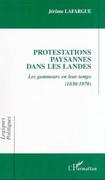
PROTESTATIONS PAYSANNES DANS LES LANDES
PROTESTATIONS PAYSANNES DANS LES LANDES: ab 17.99 €- Shop: ebook.de
- Price: 17.99 EUR excl. shipping
-
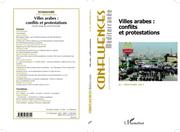
Villes arabes : conflits et protestations
Villes arabes : conflits et protestations: ab 19.49 €- Shop: ebook.de
- Price: 19.49 EUR excl. shipping
-
Organisation et protestations des commercants en bolivie
Organisation et protestations des commercants en bolivie: ab 25.99 €- Shop: ebook.de
- Price: 25.99 EUR excl. shipping
-
Fiesta!
Iain Farrington - Fiesta! This recording features four piano works of varying and disparate angles: jazzy, political, pictorial and private. It is music that aims to encompass many contrasting elements, from technical virtuosity to calm simplicity, from tunefully melodic to harshly dissonant, from lightweight fun to melancholic seriousness. Fiesta! Fiesta! Is music about celebrations and merry-making. In seven short movements, the mood is unashamedly joyous, ranging from wild excitement to intimacy. Despite the title, there are no Spanish elements in the music. It was composed and first performed in 2003. Celebration establishes the scene with it's jumpy, knock-about rhythms, and champagne-popping spirit. Lively natterings and gossipings of individuals are heard in Conversations, arguing and laughing about life. To get people on their feet, the Stride Dance launches a lively, bouncing rhythm in a Hammond organ style. A gentle Song relaxes the atmosphere before the pounding, foot-stomping rhythms of Fast Dance. As the festivities draw on, a bluesy Nocturne slackens the pace, with an improvisatory solo at the heart of the movement. Renewed energy is found in the Finale, a carefree fugue that breaks into a frantic dance. The celebrations are nearly brought to a premature conclusion by protestations from the neighbours, but this is a party that could go on and on... Mozart Variations The theme for this set of variations is Figaro's aria Non più andrai, from the end of Act One of Mozart's The Marriage of Figaro. Figaro tells Cherubino that he will no longer be chasing girls, but will be joining the army, marching to victory. The variations are heard as one continuous piece, and exploit the threatening military nature of the aria. Composed at the outbreak of the Iraq war in 2003, the work follows a path from playfulness to swaggering arrogance, through distant fanfares to violence and aggression, culminating in tolling bells and a hollow victory march. Animal Parade Animal Parade is a depiction of ten familiar animals, from the tallest to the fastest, the biggest to the nastiest. It is an affectionate caricature of wildlife, exploring the unusual characteristics of these creatures in an entertaining assortment of organ effects. The work includes an optional narration with verses for each animal by Esther Eidinow. It was composed and first performed in 2007, paired with Poulenc's Babar the Elephant. 1 - Entrance: The stage is set with a lively, rhythmic introduction, capturing a playful mood. 2 - Giraffes: A wide-ranging melody depicts the height and flexibility of the giraffe's long neck. Teetering on fragile thin legs, the piece tiptoes along gingerly. 3 - Barrel organ monkey: Raucous oom-pah off-key music is dispatched on the organ-machine with cold, grim humour. 4 - Hippopotamus: Wallowing in thick muddy water, this is the slow life of a hippo. 5 - Critics: A worthy addition to the menagerie. The music is suitably unoriginal: fatuous fanfares, sarcastic laughter and three distorted quotes from musical masterpieces that received a critical mauling at their premieres. 6 - Blue whale: The gentle heart of the whole set. From the depths of the sea a whale gently rises to the surface for air. 7 - Sparrows: Chirping and darting around the scene, the birds merrily sing to each other. 8 - Penguins: Shaking from the cold, the penguins march along, taking the occasional dive into the sea. 9 - Cheetah: With teeth showing, the cheetah embarks on a wild chase after a hapless prey. 10 - Piranhas: A tense, still atmosphere is interrupted by three bloody feasts. 11 - Alley cats: Slinky and low-down with a bluesy mood, proud cats wander the streets, tails held high. A brief encounter leaves one slightly scratched. 12 - Exit: The opening music is recalled and expanded, providing a happy conclusion to the grand show. Night Journey Night Journey was derived from a request in 2004 to compose some short, relatively simple piano pieces, from Grades 4 to 8 in standard. This grew into 24 miniatures of varying character, still restricted by the original parameters. Although quite straightforward in terms of harmonic and technical difficulty, these pieces explore a wide range of pianistic sounds and textures. The music is often highly expressive and essentially melancholic. It was written not only as a compositional challenge, but also as a way of lifting spirits. The work is loosely based on the key structure of Chopin's Preludes, progressing through each major key and it's relative minor: C major/A minor, G major/E minor, D major/B minor etc. There is also recurring and developed material in movements 1, 7, 13, 19 and 24, giving an overall shape to the work. Iain Farrington has an exceptionally busy and diverse career as a pianist, organist, composer and arranger. He studied at the Royal Academy of Music, London and at St John's College, Cambridge University. As a composer, Iain has written chamber, instrumental, vocal and choral works. He was a featured artist in Musical Opinion, described as 'a musician of exceptional promise and accomplishment...the melodic and harmonic aspects of his music, allied to a genuine creative character, combine to produce an output that is both modern and attractive.' Among notable successes include his suite Fiesta! Performed in the USA, Australia, New Zealand, Sweden, France, Germany, and across Europe and the UK, with several recordings available. Iain has arranged and performed over one hundred diverse works, from Mozart to Gershwin. He is Arranger-in-Residence for the Aurora Orchestra. His solo piano arrangement of Elgar/Payne Symphony No.3 is published by Boosey and Hawkes, and his transcription of Elgar's Five Piano Improvisations was recently published by Novello. His chamber orchestral version of Dvorák's Rusalka was performed across the UK by English Touring Opera. Iain has performed at the Wigmore Hall, Queen Elizabeth Hall, the Purcell Room, the Royal Opera House, and in Japan, South Africa, Jordan and all across Europe. He performed two solo organ works in the BBC Proms 2007 in the Royal Albert Hall, which the Independent described: "This was his Proms debut, and an exciting one. He's an authentic star, and deserves to have a Prom all to himself." He works with many of the country's leading singers and conductors, including Bryn Terfel, Lesley Garrett, Sir Simon Rattle and Sir Colin Davis. Iain is the accompanist for the London Philharmonic Choir, working regularly with Vladimir Jurowski and Kurt Masur. He gives frequent broadcasts on BBC Radio Three and has recorded numerous CD's as accompanist and soloist. He regularly gives solo piano recitals all across the UK, with his repertoire embracing contemporary, British and light music, and his own Farrington Ensemble has performed in festivals across the UK.- Shop: odax
- Price: 20.06 EUR excl. shipping
