Did you mean:
Mercantiles60 Results for : mercantilism
-

On the Principles of Political Economy and Taxation , Hörbuch, Digital, ungekürzt, 793min
The works of the English political economist David Ricardo (1772-1823), and particularly his most important work, The Principles of Political Economy and Taxation, lie at the heart of the laissez faire school of economics, preceded by Adam Smith and followed by John Stuart Mill. Economic growth, economic freedom - free trade rather than mercantilism, or controlled trade - was the fundamental attitude. Having been disowned by his Sephardic Jewish family for marrying outside the faith at the age of 21, Ricardo went on to make his own fortune, notably gaining ‘a million sterling’ by speculating on the outcome of the Battle of Waterloo. But it was with The Principles of Political Economy and Taxation (1817, revised 1821) that he placed his name in the history of economics. He expanded Smith’s ideas on the ‘labour theory of value’ and the theory of distribution. In the first, Ricardo argued that competitive market conditions linked the value or price of goods to the labour costs of producing them. In the second, he said that national product emerged from three social classes: wages for labourers, profits for owners of capital, and rents for landlords and that a benefit for one incurred a loss for another. Underpinning all this is his insistence that free trade, rather than protectionism - allowing international and domestic markets to operate without controls - was ultimately beneficial to all, though changing conditions result in occasional fluctuations. His work proved of lasting influence through Karl Marx and down to the present day. This recording, clearly read by Matthew Lloyd Davies, uses the final 1821 text. ungekürzt. Language: English. Narrator: Matthew Lloyd Davies. Audio sample: https://samples.audible.de/bk/dhrm/000202/bk_dhrm_000202_sample.mp3. Digital audiobook in aax.- Shop: Audible
- Price: 9.95 EUR excl. shipping
-

Cathedral (eBook, ePUB)
A sweeping story about obsession, mysticism, art, earthly desire, and the construction of a Cathedral in medieval Germany. At the center of this story is the Cathedral. Its design and construction in the thirteenth and fourteenth centuries in the Rhineland town of Hagenburg unites a vast array of unforgettable characters whose fortunes are inseparable from the shifting political factions and economic interests vying for supremacy. From the bishop to his treasurer to local merchants and lowly stonecutters, everyone, even the town's Jewish denizens, is implicated and affected by the slow rise of Hagenburg's Cathedral, which in no way enforces morality or charity. Around this narrative center, Ben Hopkins has constructed his own monumental edifice, a novel that is rich with the vicissitudes of mercantilism, politics, religion, and human enterprise. Fans of Umberto Eco, Hilary Mantel, and Ken Follett will delight at the atmosphere, the beautiful prose, and the vivid characters of Ben Hopkins's Cathedral. "Cathedral is a brilliantly organized mess of great, great characters. It is fascinating, fun, and gripping to the very end." -Roddy Doyle, Booker Prize-winning author of Paddy Clarke Ha Ha Ha "A varied cast of hugely engaging characters jostle for status, rising and falling according to the whims of pirates and Popes. An immersive, old-fashioned read that rattles along at a cracking pace." -Richard Beard, author of Lazarus is Dead and The Day That Went Missing "Six hundred pages sounds long, but this deeply human take on a medieval city and its commerce and aspirations, its violent battles and small intimacies, never feels that way. This sweeping work is as impressive as the cathedral at its center." -Publishers Weekly, starred review, PW Pick- Shop: buecher
- Price: 13.95 EUR excl. shipping
-

Socio economic thoughts of Al Ghazali
Introduction Al-Ghaz¿l¿ (1058-1111 C.E.), a great theologian, philosopher and Sufi (Islamic mystic), was man of erudite and a prolific Islamic scholar of philosophy and ethical values, whose writings encompass all dimensions of life with special focus on socio-economic thought. As such his discussion of economic issues emerge in the ethical perspective of human life as a whole, rather than a segregated value-neutral discipline as it appears in the contemporary economic analyses and systems. Hence his analysis is generally normative rather than positive in nature. He was one of those eminent scholars of Iran who has left indelible impact on the Muslim world through his very significant contribution to different branches of Islamic learning: Islamic jurisprudence, theology, philosophy and mysticism. Being a Sunni Scholar, he belonged to the Sh¿fi'¿ School of Islamic jurisprudence and at the same time followed Ash'arite School of theology. While debated on Ghazali's life and contribution, the scholars were and are extensively involved in studying and examining the range of texts he had written in order to get a better picture of the man. For some people Ghazali is the great "Defender of Islam" (¿ujjat al-Islam,); ¿ujjat literally meaning "proof". Others blame him for damaging the rational edifice of Islamic thought in his sharp critique of Muslim philosophers such as Ibn Sina and Al-F¿r¿bi. Al-Ghaz¿l¿ was writing in the second half of the 11th and early 12th centuries which were roughly six centuries before the emergence of Mercantilism and seven centuries before Adam Smith (1723-1790 C.E), that is, roughly six to seven centuries before the beginning of economics as a separate discipline. Even then, it is interesting to note that Al-Ghaz¿l¿ writings contain a good number of economic ideas, although discussed in the ethical normative perspective. This aspect of Imam Ghaz¿l¿ has not been taken up in detail by any of the contemporary scholarship. The socio-economic aspects of Ghaz¿l¿'s thinking can only present a bare outline, but from this we can grasp what might be called his "Islamic social welfare function" as well as his views on the role of economic activities generally. An overriding aspect throughout his works is the concept of Mäli¿a, or social welfare or utility ("common good"), a concept which encompasses all human affairs, economic and others, and which,- Shop: buecher
- Price: 23.99 EUR excl. shipping
-
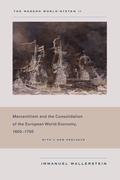
The Modern World-System II
The Modern World-System II - Mercantilism and the Consolidation of the European World-Economy 1600-1750: ab 36.99 €- Shop: ebook.de
- Price: 36.99 EUR excl. shipping
-
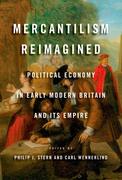
Mercantilism Reimagined
Mercantilism Reimagined - Political Economy in Early Modern Britain and Its Empire: ab 118.99 €- Shop: ebook.de
- Price: 118.99 EUR excl. shipping
-

Sick Economies
Sick Economies - Drama Mercantilism and Disease in Shakespeare's England: ab 75.49 €- Shop: ebook.de
- Price: 75.49 EUR excl. shipping
-

-
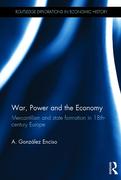
War Power and the Economy
War Power and the Economy - Mercantilism and state formation in 18th-century Europe: ab 38.49 €- Shop: ebook.de
- Price: 38.49 EUR excl. shipping
-
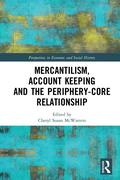
Mercantilism Account Keeping and the Periphery-Core Relationship
Mercantilism Account Keeping and the Periphery-Core Relationship: ab 46.49 €- Shop: ebook.de
- Price: 46.49 EUR excl. shipping
-
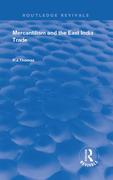
Mercantilism and East India Trade
Mercantilism and East India Trade: ab 29.99 €- Shop: ebook.de
- Price: 29.99 EUR excl. shipping