53 Results for : pogroms
-

The Crypto-Jews: The History of the Forcibly Converted Jews Who Secretly Practiced Judaism During the Inquisition , Hörbuch, Digital, ungekürzt, 103min
The road to the modern age of cultural harmony and acceptance is one of the finest feats of human progress, but having said that, there was once a time when the mere doubt of a religious figure's existence was not only punishable by law, it could very well cost a man his life. This was the crime of heresy. This kind of religious persecution has been around for thousands of years, and Christians were often the victims, but when the Catholic Church began its rapid expansion throughout Europe during the Middle Ages, the tables were turned. In 1184, Pope Lucius III issued a papal bull that would kick off a long-standing tradition of heretic-hunting, and as a result, the Age of the Inquisitions commenced. By the end of the 14th century, the distrust and prejudice against Jewish communities quickly spread to Spain. In 1391, James II of Aragon boarded the bandwagon; backed into a corner by the Roman Catholic Church, he established a law that banned Jews from Spain altogether. Jews were shunned in droves, and the remaining were given an ultimatum to either convert/revert to Catholicism or face immediate death. Yet another wave of gory pogroms ensued across the country, especially in Barcelona. For nearly 400 years, the city of Barcelona had served as the central hub of the European Jewish communities, but in just 3 years, all 23 Jewish synagogues in Barcelona had been forcibly demolished. Nothing but charred remnants and ashes lay in its place. Converso was the term given to any individual of Jewish or Muslim faith who had been converted to Catholicism. While some conversos were coerced into the conversion, others, like ha-Levi, willingly converted. This was a label given not only to the generation of the converted, it was also inherited by their children and descendants as well. Conversos prided themselves on being a new generation of Christians. Although they were of Jewish descent, they embraced the “true” Catholic religion. There were even those who cl ungekürzt. Language: English. Narrator: Colin Fluxman. Audio sample: https://samples.audible.de/bk/acx0/202389/bk_acx0_202389_sample.mp3. Digital audiobook in aax.- Shop: Audible
- Price: 9.95 EUR excl. shipping
-

Die neuen alttestamentlichen Perikopentexte
Mit dem Kirchenjahr 2018/19 trat eine neue Perikopenordnung in Kraft, die über siebzig neue alttestamentliche Predigttexte vorsieht. Mit diesen macht der Band vertraut. Jede Perikope wird exegetisch kommentiert und liturgisch-homiletisch in den Kontext des betreffenden Propriums eingebettet. Dabei werden auch Fragen behandelt, die immer schon die Predigt alttestamentlicher Texte begleitet haben: Was bedeutet es exegetisch, theologisch und homiletisch, dass diese Texte nicht unter dem Eindruck des Christusereignisses verfasst wurden? Macht es einen Unterschied, ob man über einen neu- oder alttestamentlichen Text predigt? Und welche Bedeutung hat, dass dieselben Texte zum christlichen und jüdischen Kanon gehören?Die erweiterte Neuauflage enthält nun auch die 16 neuen alttestamentlichen Texte, die den sogenannten »Weiteren Fest- und Gedenktagen« der Perikopenordnung - wie Reformationsfest, Johannis- und Michaelistag, Martins- und Nikolaustag, dem Tag des Gedenkens an die Novemberpogrome und an die Opfer des Nationalsozialismus - zugeordnet sind.[The New Old Testamenr Pericope Texts]With the church year 2018/19, a new pericope order came into force, providing for just over seventy new Old Testament sermon texts. The volume familiarizes the reader with these texts. Each pericope is commented on exegetically and embedded liturgically-homiletically in the context of the respective proper. Also questions which have always accompanied the preaching of Old Testament texts are dealt with: What does it mean exegetically, theologically and homiletically that these texts were not written under the influence of the Christ event? Does it make a difference whether one preaches about a New or Old Testament text? And what does it mean that the same texts are part of both, the Christian and the Jewish canon?The extended new edition now also contains the 16 new Old Testament texts that are assigned to the so-called »further feast and commemoration days« of the pericope order - such as Reformation Day, St. John's and St. Michael's Day, St. Martin's and St. Nicholas' Day, the Day of Commemoration of the November Pogroms and the Victims of National Socialism. Zusatz78 27. Januar - Tag des Gedenkens an die Opfer des National- sozialismus Gen 4,1-1079 27. Januar - Tag des Gedenkens an die Opfer des National- sozialismus Pred 8,10- 14.1780 2.2. - Lichtmess Ex 13,1.2.14-1681 2.2. - Lichtmess Jes 49,1-682 29.9. - Michaelis Gen 21,8-2183 29.9. - Michaelis Num 22,31-3584 Erntedankfest Dtn 8,7-1885 Reformationsfest Dtn 6,4-986 Reformationsfest Ps 4687 1.11. - Gedenktag der Heiligen Dan 7,1-3.13-18.2788 9.11. - Tag des Gedenkens an die Novemberpogrome Spr 24,10-1289 9.11. - Tag des Gedenkens an die Novemberpogrome Ex 1,15-2290 11.11. - Martinstag Jes 58,6-1191 6.12. - Nikolaustag Jes 61,1-2.1092 26.12. -Tag des Erzmärtyrers Stephanus Jer 26,1-1393 Kirchweih 1Kön 8,27-3094 Kirchweih Ps 84,2-13- Shop: buecher
- Price: 29.90 EUR excl. shipping
-

The Murders of Moisés Ville: The Rise and Fall of the Jerusalem of South America
Award-winning journalist Javier Sinay investigates a series of murders from the nineteenth century, unearthing the complex history and legacy of Moisés Ville, the "Jerusalem of South America," and his personal connection to a defining period of Jewish history in Argentina.When Argentine journalist Javier Sinay discovers an article from 1947 by his great-grandfather detailing twenty-two murders that had occurred in Moisés Ville at the end of the nineteenth century, he launches into his own investigation that soon turns into something deeper: an exploration of the history of Moisés Ville, one of the first Jewish agricultural communities in Argentina, and Sinay's own connection to this historically thriving Jewish epicenter. Seeking refuge from the pogroms of Czarist Russia, a group of Jewish immigrants founded Moisés Ville in the late 1880s. Like their town's prophetic namesake, these immigrants fled one form of persecution only to encounter a different set of hardships: exploitative land prices, starvation, illness, language barriers, and a series of murders perpetrated by roving gauchos who preyed upon their vulnerability. Sinay, though a descendant of these immigrants, is unfamiliar with this turbulent history, and his research into the spate of violence plunges him into his family's past and their link to Moisés Ville. He combs through libraries and archives in search of documents about the murders and hires a book detective to track down issues of Der Viderkol, the first Yiddish newspaper in Argentina started by his great-grandfather. He even enrolls in Yiddish classes so he can read the newspaper and other contemporaneous records for himself. Through interviews with his family members, current residents of Moisés Ville, historians, and archivists, Sinay compiles moving portraits of the victims of these heinous murders and reveals the fascinating and complex history of the town once known as the "Jerusalem of South America." "Sinay acknowledges the impossibility of fully separating legends from facts. . . but his diligence has produced as definitive an account as possible of what actually happened during this bloody period. This nuanced search for truth should have broad appeal." -Publishers Weekly, starred review "I greatly admire Javier Sinay's enlightening and humane account of his sleuthing-the disinterment of a violent episode of buried history-now no longer forgotten. Its implications resonate far beyond the borders of Argentina." -Paul Theroux, author of The Mosquito Coast and Under the Wave at Waimea "Part detective story, part family history, The Murders of Moisés Ville: The Rise and Fall of the Jerusalem of South America - by Buenos Aires journalist Javier Sinay- offers a compelling path to learn more." -Howard Freedman, Jewish News of Northern California- Shop: buecher
- Price: 25.99 EUR excl. shipping
-

The Murders of Moisés Ville (eBook, ePUB)
Award-winning journalist Javier Sinay investigates a series of murders from the nineteenth century, unearthing the complex history and legacy of Moisés Ville, the "Jerusalem of South America," and his personal connection to a defining period of Jewish history in Argentina.When Argentine journalist Javier Sinay discovers an article from 1947 by his great-grandfather detailing twenty-two murders that had occurred in Moisés Ville at the end of the nineteenth century, he launches into his own investigation that soon turns into something deeper: an exploration of the history of Moisés Ville, one of the first Jewish agricultural communities in Argentina, and Sinay's own connection to this historically thriving Jewish epicenter. Seeking refuge from the pogroms of Czarist Russia, a group of Jewish immigrants founded Moisés Ville in the late 1880s. Like their town's prophetic namesake, these immigrants fled one form of persecution only to encounter a different set of hardships: exploitative land prices, starvation, illness, language barriers, and a series of murders perpetrated by roving gauchos who preyed upon their vulnerability. Sinay, though a descendant of these immigrants, is unfamiliar with this turbulent history, and his research into the spate of violence plunges him into his family's past and their link to Moisés Ville. He combs through libraries and archives in search of documents about the murders and hires a book detective to track down issues of Der Viderkol, the first Yiddish newspaper in Argentina started by his great-grandfather. He even enrolls in Yiddish classes so he can read the newspaper and other contemporaneous records for himself. Through interviews with his family members, current residents of Moisés Ville, historians, and archivists, Sinay compiles moving portraits of the victims of these heinous murders and reveals the fascinating and complex history of the town once known as the "Jerusalem of South America.""Sinay acknowledges the impossibility of fully separating legends from facts. . . but his diligence has produced as definitive an account as possible of what actually happened during this bloody period. This nuanced search for truth should have broad appeal."-Publishers Weekly, starred review"I greatly admire Javier Sinay's enlightening and humane account of his sleuthing-the disinterment of a violent episode of buried history-now no longer forgotten. Its implications resonate far beyond the borders of Argentina."-Paul Theroux, author of The Mosquito Coast and Under the Wave at Waimea"Part detective story, part family history, The Murders of Moisés Ville: The Rise and Fall of the Jerusalem of South America - by Buenos Aires journalist Javier Sinay- offers a compelling path to learn more."-Howard Freedman, Jewish News of Northern California- Shop: buecher
- Price: 8.95 EUR excl. shipping
-
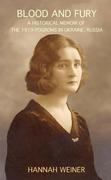
Blood and Fury: A Historical Memoir of the 1919 Pogroms in Ukraine Russia
Blood and Fury: A Historical Memoir of the 1919 Pogroms in Ukraine Russia: ab 2.65 €- Shop: ebook.de
- Price: 2.65 EUR excl. shipping
-

On the Threshold of the Holocaust
On the Threshold of the Holocaust - Anti-Jewish Riots and Pogroms in Occupied Europe. Warsaw - Paris - The Hague - Amsterdam - Antwerp - Kaunas: ab 53.99 €- Shop: ebook.de
- Price: 53.99 EUR excl. shipping
-
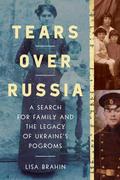
Tears Over Russia
Tears Over Russia - A Search for Family and the Legacy of Ukraine's Pogroms: ab 13.12 €- Shop: ebook.de
- Price: 13.12 EUR excl. shipping
-
Workers Strikes and Pogroms
Workers Strikes and Pogroms - The Donbass-Dnepr Bend in Late Imperial Russia 1870-1905: ab 43.99 €- Shop: ebook.de
- Price: 43.99 EUR excl. shipping
-
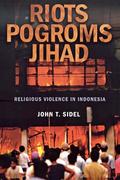
Riots Pogroms Jihad
Riots Pogroms Jihad - Religious Violence in Indonesia: ab 151.99 €- Shop: ebook.de
- Price: 151.99 EUR excl. shipping
-
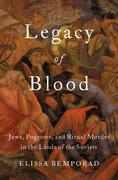
Legacy of Blood
Legacy of Blood - Jews Pogroms and Ritual Murder in the Lands of the Soviets: ab 58.99 €- Shop: ebook.de
- Price: 58.99 EUR excl. shipping