50 Results for : statuary
-

The Dynasties of Ancient Egypt: The History and Legacy of the Pharaohs from the Beginning of Egyptian Civilization to the Rise of Rome , Hörbuch, Digital, ungekürzt, 305min
Africa may have given rise to the first human beings, and Egypt probably gave rise to the first great civilizations, which continue to fascinate modern societies across the globe nearly 5,000 years later. From the Library and Lighthouse of Alexandria to the Great Pyramid at Giza, the Ancient Egyptians produced several wonders of the world, revolutionized architecture and construction, created some of the world’s first systems of mathematics and medicine, and established language and art that spread across the known world. With world-famous leaders like King Tut and Cleopatra, it’s no wonder that today’s world has so many Egyptologists. What makes the accomplishments of the Ancient Egyptians all the more remarkable is that Egypt was historically a place of great political turbulence. Its position made it both valuable and vulnerable to tribes across the Mediterranean and the Middle East, and Ancient Egypt had no shortage of its own internecine warfare. Its most famous conquerors would come from Europe, with Alexander the Great laying the groundwork for the Hellenic Ptolemy line and the Romans extinguishing that line after defeating Cleopatra and driving her to suicide. Perhaps the most intriguing aspect of ancient Egyptian civilization was its inception from the ground up, as the ancient Egyptians had no prior civilization which they could use as a template. In fact, ancient Egypt itself became a template for the civilizations that followed. The Greeks and the Romans were so impressed with Egyptian culture that they often attributed many attributes of their own culture (usually erroneously) to the Egyptians. With that said, some minor elements of ancient Egyptian culture were, indeed, passed on to later civilizations. Egyptian statuary appears to have had an initial influence on the Greek version, and the ancient Egyptian language continued long after the pharaonic period in the form of the Coptic language. The Dynasties of Ancient Egypt: T ungekürzt. Language: English. Narrator: Scott Clem. Audio sample: https://samples.audible.de/bk/acx0/104249/bk_acx0_104249_sample.mp3. Digital audiobook in aax.- Shop: Audible
- Price: 9.95 EUR excl. shipping
-

Louder Than Words: The New Science of How the Mind Makes Meaning , Hörbuch, Digital, ungekürzt, 481min
Whether it’s brusque, convincing, fraught with emotion, or dripping with innuendo, language is fundamentally a tool for conveying meaning - a uniquely human magic trick in which you vibrate your vocal cords to make your innermost thoughts pop up in someone else’s mind. You can use it to talk about all sorts of things - from your new labradoodle puppy to the expansive gardens at Versailles, from Roger Federer’s backhand to things that don’t exist at all, like flying pigs. And when you talk, your listener fills in lots of details you didn’t mention - the curliness of the dog’s fur or the vast statuary on the grounds of the French palace. What’s the trick behind this magic? How does meaning work? In Louder than Words, cognitive scientist Benjamin Bergen draws together a decade’s worth of research in psychology, linguistics, and neuroscience to offer a new theory of how our minds make meaning. When we hear words and sentences, Bergen contends, we engage the parts of our brain that we use for perception and action, repurposing these evolutionarily older networks to create simulations in our minds. These embodied simulations, as they're called, are what makes it possible for us to become better baseball players by merely visualizing a well-executed swing; what allows us to remember which cupboard the diapers are in without looking, and what makes it so hard to talk on a cell phone while we’re driving on the highway. Meaning is more than just knowing definitions of words, as others have previously argued. In understanding language, our brains engage in a creative process of constructing rich mental worlds in which we see, hear, feel, and act. Through whimsical examples and ingenious experiments, Bergen leads us on a virtual tour of the new science of embodied cognition. A brilliant account of our human capacity to understand language, Louder than Words will profoundly change how you read, speak, and listen. ungekürzt. Language: English. Narrator: Benjamin K. Bergen. Audio sample: https://samples.audible.de/bk/gdan/001182/bk_gdan_001182_sample.mp3. Digital audiobook in aax.- Shop: Audible
- Price: 9.95 EUR excl. shipping
-

Akhenaten and Amarna: The History of Ancient Egypt’s Most Mysterious Pharaoh and His Capital City , Hörbuch, Digital, ungekürzt, 139min
Perhaps the most intriguing aspect of ancient Egyptian civilization was its inception from the ground up, as the ancient Egyptians had no prior civilization which they could use as a template. In fact, ancient Egypt itself became a template for the civilizations that followed. The Greeks and the Romans were so impressed with Egyptian culture that they often attributed many attributes of their own culture, usually erroneously, to the Egyptians. With that said, some minor elements of ancient Egyptian culture were, indeed, passed on to later civilizations. Egyptian statuary appears to have had an initial influence on the Greek version, and the ancient Egyptian language continued long after the pharaonic period in the form of the Coptic language.Part of the reason Egyptian history is so intriguing is because it is so enigmatic - even today, despite the wealth of written materials and countless monuments, Egyptologists constantly uncover more mysteries about ancient Egypt, even if many of those mysteries are somewhat mundane and appeal more to academics. For example, historians still debate precise chronologies of dynasties, theological nuances, and architectural details.One such mystery that shows no signs of going away is the history of the archeological site known as Amarna, which is actually the name of the modern village that is closest to the ancient Egyptian city of Akhet-Aten. Akhet-Aten was built during the reign of one of Egypt’s most enigmatic pharaohs, Akhenaten (ruled ca. 1364-1347 BCE), and modern archaeological studies have shown it was hastily built and almost as quickly abandoned.Although the city had a brief lifespan, it was vitally important at the time, so much so that the late 18th Dynasty has been named the Amarna Period by modern scholars. The importance is reflected in the changes that Akhenaten attempted to make to Egyptian religion, art, architecture, and society, all of which can be found among the ruins of Amarna, from ungekürzt. Language: English. Narrator: Colin Fluxman. Audio sample: https://samples.audible.de/bk/acx0/152260/bk_acx0_152260_sample.mp3. Digital audiobook in aax.- Shop: Audible
- Price: 9.95 EUR excl. shipping
-

Ancient Egypt’s Most Famous Royal Family: The Lives and Deaths of Akhenaten, Nefertiti, and Tutankhamun , Hörbuch, Digital, ungekürzt, 180min
Africa may have given rise to the first human beings, and Egypt probably gave rise to the first great civilizations, which continue to fascinate modern societies across the globe nearly 5,000 years later. From the Library and Lighthouse of Alexandria to the Great Pyramid at Giza, the Ancient Egyptians produced several wonders of the world, revolutionized architecture and construction, created some of the world’s first systems of mathematics and medicine, and established language and art that spread across the known world. With world-famous leaders like King Tut and Cleopatra, it’s no wonder that today’s world has so many Egyptologists. Perhaps the most intriguing aspect of ancient Egyptian civilization was its inception from the ground up, as the ancient Egyptians had no prior civilization which they could use as a template. In fact, ancient Egypt itself became a template for the civilizations that followed. The Greeks and the Romans were so impressed with Egyptian culture that they often attributed many attributes of their own culture - usually erroneously - to the Egyptians. With that said, some minor elements of ancient Egyptian culture were, indeed, passed on to later civilizations. Egyptian statuary appears to have had an initial influence on the Greek version, and the ancient Egyptian language continued long after the pharaonic period in the form of the Coptic language.Although the Egyptians may not have passed their civilization directly on to later peoples, the key elements that comprised Egyptian civilization, including their religion, early ideas of state, and art and architecture, can be seen in other pre-modern civilizations. Indeed, since Egyptian civilization represented some fundamental human concepts, a study of their culture can be useful when trying to understand many other pre-modern cultures.Part of the reason Egyptian history is so intriguing is because it is so enigmatic - even today, despite the wealth of written materi ungekürzt. Language: English. Narrator: Colin Fluxman. Audio sample: https://samples.audible.de/bk/acx0/152259/bk_acx0_152259_sample.mp3. Digital audiobook in aax.- Shop: Audible
- Price: 9.95 EUR excl. shipping
-

The Old Kingdom of Ancient Egypt: The History and Legacy of the Beginning of Egyptian Civilization , Hörbuch, Digital, ungekürzt, 70min
Africa may have given rise to the first human beings, and Egypt probably gave rise to the first great civilizations, which continue to fascinate modern societies across the globe nearly 5,000 years later. From the Library and Lighthouse of Alexandria to the Great Pyramid at Giza, the ancient Egyptians produced several wonders of the world, revolutionized architecture and construction, created some of the world's first systems of mathematics and medicine, and established language and art that spread across the known world. With world-famous leaders like King Tut and Cleopatra, it's no wonder that today's world has so many Egyptologists. What makes the accomplishments of the Ancient Egyptians all the more remarkable is that Egypt was historically a place of great political turbulence. Its position made it both valuable and vulnerable to tribes across the Mediterranean and the Middle East, and Ancient Egypt had no shortage of internecine warfare. Its most famous conquerors would come from Europe, with Alexander the Great laying the groundwork for the Hellenic Ptolemy line and the Romans extinguishing that line after defeating Cleopatra and driving her to suicide. Perhaps the most intriguing aspect of ancient Egyptian civilization was its inception from the ground up, as the ancient Egyptians had no prior civilization which they could use as a template. In fact, ancient Egypt itself became a template for the civilizations that followed. The Greeks and the Romans were so impressed with Egyptian culture that they often attributed many attributes of their own culture - usually erroneously - to the Egyptians. With that said, some minor elements of ancient Egyptian culture were, indeed, passed on to later civilizations. Egyptian statuary appears to have had an initial influence on the Greek version, and the ancient Egyptian language continued long after the pharaonic period in the form of the Coptic language. Although the Egyptians may not have passe ungekürzt. Language: English. Narrator: Scott Clem. Audio sample: https://samples.audible.de/bk/acx0/077891/bk_acx0_077891_sample.mp3. Digital audiobook in aax.- Shop: Audible
- Price: 9.95 EUR excl. shipping
-

Neither the Time nor the Place (eBook, ePUB)
The usefulness of time and place as defining categories would seem to be baked into the very notion of nineteenth-century American literary studies, yet they have challenged scholars practically since the field's inception. In Neither the Time nor the Place seventeen critics consider how the space-time dyad has both troubled and invigorated Americanist scholarship in recent decades and make explicit how time and place are best considered in tandem, interrogating each other. Taken together, the essays challenge depictions of place and time as bounded and linear, fixed and teleological, or mere ideological constructions. They address both familiar and unexpected objects, practices, and texts, including a born-digital Melville, documents from the construction of the Panama Canal, the hollow earth, the desiring body, textual editing, marble statuary, the sound of frogs, spirit photography, and twentieth-century Civil War fiction. The essays draw on an equally wide variety of critical methodologies, integrating affect studies, queer theory, book history, information studies, sound studies, environmental humanities, new media studies, and genre theory to explore the unexpected dimensions that emerge when time and place are taken as a unit. The pieces are organized around considerations of citizenship, environment, historiography, media, and bodies-five political, cultural, and/or methodological foci for some of the most provocative new work being done in American literary studies. Neither the Time nor the Place is a book not only for scholars and students already well grounded in the study of nineteenth-century American literature and culture, but for anyone, scholar or student, looking for a roadmap to some of the most vibrant work in the field. Contributors: Wai Chee Dimock, Stephanie Foote, Matthew Pratt Guterl, Coleman Hutchison, Rodrigo Lazo, Caroline Levander, Robert S. Levine, Christopher Looby, Dana Luciano, Timothy Marr, Dana D. Nelson, Ifeoma C. Kiddoe Nwankwo, Mark Storey, Matthew E. Suazo, and Edward Sugden.- Shop: buecher
- Price: 27.95 EUR excl. shipping
-

The Antiquities Of Constantinople
The Antiquities Of Constantinople ab 22.49 € als Taschenbuch: With A Description Of Its Situation The Conveniencies Of Its Port Its Publick Buildings The Statuary Sculpture Architecture And Other Curiosities Of That City. With Cuts Explaining The Chief Of Them. In Four Books.. Aus dem Bereich: Bücher, English, International, Englische Taschenbücher,- Shop: hugendubel
- Price: 22.49 EUR excl. shipping
-
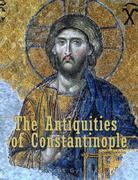
The Antiquities of Constantinople
The Antiquities of Constantinople - With a Description of its Situation the Conveniencies of its Port its Publick Buildings the Statuary Sculpture Architecture and other Curiosities of that City. With Cuts explaining the Chief of: ab 1.93 €- Shop: ebook.de
- Price: 1.93 EUR excl. shipping
-
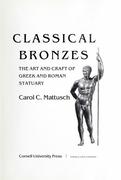
Classical Bronzes
Classical Bronzes - The Art and Craft of Greek and Roman Statuary: ab 151.99 €- Shop: ebook.de
- Price: 151.99 EUR excl. shipping
-
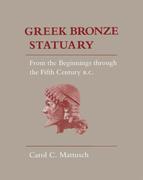
Greek Bronze Statuary
Greek Bronze Statuary - From the Beginnings Through the Fifth Century B. C.: ab 151.99 €- Shop: ebook.de
- Price: 151.99 EUR excl. shipping