Did you mean:
Chronologie81 Results for : chronologies
-

Socrates: Philosophy in an Hour , Hörbuch, Digital, ungekürzt, 78min
Philosophy for busy people. Listen to this succinct account of the philosophy of Socrates in just one hour. Socrates is widely renowned as one of the founders of Western philosophy, despite the fact that his ideas survive largely through the work of his pupil Plato. Socrates’ dialectic – a method of aggressive questioning – was the forerunner of logic; he used it to cut through the pretentions of his adversaries and arrive at the truth. Socrates placed philosophy on the sound basis of reason, believing it to be better to question ourselves rather than the world around us and viewing the world as inaccessible to our senses – only to thought. Charged with impiety and the corruption of youth Socrates was eventually tried and sentenced to death, ending his life by drinking the judicial hemlock. This audiobook is an expert account of Socrates’ life and philosophical ideas – entertainingly written and is above all easy listening. Also included are selections from Socrates’ work, suggested further reading, and chronologies that place Socrates in the context of the broader scheme of philosophy. ungekürzt. Language: English. Narrator: Jonathan Keeble. Audio sample: https://samples.audible.de/bk/hcuk/001322/bk_hcuk_001322_sample.mp3. Digital audiobook in aax.- Shop: Audible
- Price: 9.95 EUR excl. shipping
-

Heidegger: Philosophy in an Hour , Hörbuch, Digital, ungekürzt, 89min
Philosophy for busy people who are always on the go but have always wanted to read up on certain figures in history that have shaped the way we think and live. Listen to this succinct account of the philosophy of Heidegger in just one hour. One of the two major philosophical traditions of the 20th century was linguistic analysis, derived largely from Wittgenstein. The other, diametrically opposed, came from Heidegger, and its fundamental question was: ‘What is the meaning of existence?’ For Heidegger, this was not a query that could simply be ‘analysed away’ - it was beyond the reach of logic or reason. This was the primary ‘given’ of every individual life. To confront it, Heidegger needed to develop an entirely new form of philosophy. Here is a concise, expert account of Heidegger’s life and philosophical ideas that is entertainingly written and easy to understand. Also included are selections from Heidegger’s work, suggested further reading, and chronologies that place Heidegger in the context of the broader scheme of philosophy. ungekürzt. Language: English. Narrator: Jonathan Keeble. Audio sample: https://samples.audible.de/bk/hcuk/001318/bk_hcuk_001318_sample.mp3. Digital audiobook in aax.- Shop: Audible
- Price: 9.95 EUR excl. shipping
-

Tell Me Everything You Don't Remember: The Stroke That Changed My Life , Hörbuch, Digital, ungekürzt, 446min
A memoir of reinvention after a stroke at 33, based on the author's viral Buzzfeed essay. Christine Hyung-Oak Lee woke up with a headache on New Year's Eve 2006. By that afternoon she saw the world - quite literally - upside down. By New Year's Day, she was unable to form a coherent sentence. And after hours in the ER, days in the hospital, and multiple questions and tests, she learned that she had had a stroke. For months Lee outsourced her memories to her notebook. It is from these memories that she has constructed this frank and compelling memoir. In a precise and captivating narrative, Lee navigates fearlessly between chronologies, weaving her childhood humiliations and joys together with the story of the early days of her marriage and then later, in painstaking, painful, and unflinching detail, her stroke and every upset, temporary or permanent, that it causes. Lee processes her stroke and illuminates the connection between memory and identity in an honest, meditative, and truly funny manner, utterly devoid of self-pity. And as she recovers, she begins to realize that this unexpected and devastating event provides a catalyst for coming to terms with her true self. ungekürzt. Language: English. Narrator: Emily Woo Zeller. Audio sample: https://samples.audible.de/bk/harp/005772/bk_harp_005772_sample.mp3. Digital audiobook in aax.- Shop: Audible
- Price: 9.95 EUR excl. shipping
-

The Picture of Dorian Gray: Full Version (Annotated) , Hörbuch, Digital, ungekürzt, 502min
The Picture of Dorian Gray, by Oscar Wilde, is part of the Literary Classics collection, which offers quality editions at affordable prices to the student and the general reader, including new scholarship, thoughtful design, and pages of carefully crafted extras. Here are some of the remarkable features of the Literary Classics collection: New introductions commissioned from today's top writers and scholars Biographies of the authors Chronologies of contemporary historical, biographical, and cultural events Footnotes and endnotes Selective discussions of imitations, parodies, poems, books, plays, paintings, operas, statuary, and films inspired by the work Comments by other famous authors Study questions to challenge the reader's viewpoints and expectations Bibliographies for further reading Indices & glossaries, when appropriate The Literary Classics collection pulls together a constellation of influences - biographical, historical, and literary - to enrich each reader's understanding of these enduring works. Oscar Wilde's story of a fashionable young man who sells his soul for eternal youth and beauty is one of his most popular works. Written in Wilde's characteristically dazzling manner, full of stinging epigrams and shrewd observations, the tale of Dorian Gray's moral disintegration caused something of a scandal when it first appeared in 1890. Wilde was attacked for his decadence and corrupting influence, and a few years later the book and the aesthetic/moral dilemma it presented became issues in the trials occasioned by Wilde's homosexual liaisons, trials that resulted in his imprisonment. Of the book's value as autobiography, Wilde noted in a letter, "Basil Hallward is what I think I am; Lord Henry what the world thinks me; Dorian what I would like to be - in other ages, perhaps." ungekürzt. Language: English. Narrator: Gerry O'Brien. Audio sample: https://samples.audible.de/bk/acx0/116326/bk_acx0_116326_sample.mp3. Digital audiobook in aax.- Shop: Audible
- Price: 9.95 EUR excl. shipping
-

The Mycenaeans: The History and Culture of Ancient Greece's First Advanced Civilization , Hörbuch, Digital, ungekürzt, 76min
When people think of ancient Greece, images of philosophers such as Plato or Socrates often come to mind, as do great warriors like Pericles and Alexander the Great. But hundreds of years before Athens became a city, a Greek culture flourished and spread its tentacles throughout the Western Mediterranean region via trade and warfare. Scholars have termed this preclassical Greek culture the Mycenaean culture. It existed from about 2000 to 1200 BCE, when Greece, along with much of the Eastern Mediterranean, was thrust into a centuries-long dark age. Before the Mycenaean culture collapsed, it was a vital part of the late Bronze Age Mediterranean system and stood on equal footing with some of the great powers of the region, such as the Egyptians and Hittites. Despite being ethnic Greeks and speaking a language that was the direct predecessor of classical Greek, the Mycenaeans had more in common with their neighbors from the island of Crete, who are known today as the Minoans. Due to their cultural affinities with the Minoans and the fact that they conquered Crete yet still carried on many Minoan traditions, the Mycenaeans are viewed by some scholars as the later torchbearers of a greater Aegean civilization. This is similar to the way the Romans carried on Hellenic civilization after the Greeks. Given that the Mycenaeans played such a vital role in history in the late Bronze Age, it would be natural to assume there are countless studies and accurate chronologies on the subject, but the opposite is true. Although the Mycenaeans were literate, the corpus of written texts from the period is minimal, so modern scholars are left to use a variety of methods in order to reconstruct a proper history of Mycenaean culture. ungekürzt. Language: English. Narrator: Gabrielle Byrne. Audio sample: https://samples.audible.de/bk/acx0/035695/bk_acx0_035695_sample.mp3. Digital audiobook in aax.- Shop: Audible
- Price: 9.95 EUR excl. shipping
-

Heliopolis: The History and Legacy of Ancient Egypt's Cult Center for the Sun God Atum , Hörbuch, Digital, ungekürzt, 108min
Africa may have given rise to the first human beings, and Egypt probably gave rise to the first great civilizations, which continue to fascinate modern societies across the globe nearly 5,000 years later. From the Library and Lighthouse of Alexandria to the Great Pyramid at Giza, the Ancient Egyptians produced several wonders of the world, revolutionized architecture and construction, created some of the world’s first systems of mathematics and medicine, and established language and art that spread across the known world. With world-famous leaders like King Tut and Cleopatra, it’s no wonder that today’s world has so many Egyptologists.What makes the accomplishments of the Ancient Egyptians all the more remarkable is that Egypt was historically a place of great political turbulence. Its position made it both valuable and vulnerable to tribes across the Mediterranean and the Middle East, and Ancient Egypt had no shortage of its own internecine warfare. Its most famous conquerors would come from Europe, with Alexander the Great laying the groundwork for the Hellenic Ptolemy line and the Romans extinguishing that line after defeating Cleopatra and driving her to suicide.Part of the reason Egyptian history is so intriguing is because it is so enigmatic - even today, despite the wealth of written materials and countless monuments, Egyptologists constantly uncover more mysteries about ancient Egypt, even if many of those mysteries are somewhat mundane and appeal more to academics. For example, historians still debate precise chronologies of dynasties, theological nuances, and architectural details.The city of Heliopolis was one of ancient Egypt’s most important religious centers, the focus of the civilization’s solar cult, and a destination for pilgrims for nearly 3,000 years. It was at Heliopolis where Egyptian priests developed one of Egypt’s three major creation myths, which, like any aspect of a culture that survived for as long as Egypt’s did, ungekürzt. Language: English. Narrator: Jim D Johnston. Audio sample: https://samples.audible.de/bk/acx0/178353/bk_acx0_178353_sample.mp3. Digital audiobook in aax.- Shop: Audible
- Price: 9.95 EUR excl. shipping
-

Akhenaten and Amarna: The History of Ancient Egypt’s Most Mysterious Pharaoh and His Capital City , Hörbuch, Digital, ungekürzt, 139min
Perhaps the most intriguing aspect of ancient Egyptian civilization was its inception from the ground up, as the ancient Egyptians had no prior civilization which they could use as a template. In fact, ancient Egypt itself became a template for the civilizations that followed. The Greeks and the Romans were so impressed with Egyptian culture that they often attributed many attributes of their own culture, usually erroneously, to the Egyptians. With that said, some minor elements of ancient Egyptian culture were, indeed, passed on to later civilizations. Egyptian statuary appears to have had an initial influence on the Greek version, and the ancient Egyptian language continued long after the pharaonic period in the form of the Coptic language.Part of the reason Egyptian history is so intriguing is because it is so enigmatic - even today, despite the wealth of written materials and countless monuments, Egyptologists constantly uncover more mysteries about ancient Egypt, even if many of those mysteries are somewhat mundane and appeal more to academics. For example, historians still debate precise chronologies of dynasties, theological nuances, and architectural details.One such mystery that shows no signs of going away is the history of the archeological site known as Amarna, which is actually the name of the modern village that is closest to the ancient Egyptian city of Akhet-Aten. Akhet-Aten was built during the reign of one of Egypt’s most enigmatic pharaohs, Akhenaten (ruled ca. 1364-1347 BCE), and modern archaeological studies have shown it was hastily built and almost as quickly abandoned.Although the city had a brief lifespan, it was vitally important at the time, so much so that the late 18th Dynasty has been named the Amarna Period by modern scholars. The importance is reflected in the changes that Akhenaten attempted to make to Egyptian religion, art, architecture, and society, all of which can be found among the ruins of Amarna, from ungekürzt. Language: English. Narrator: Colin Fluxman. Audio sample: https://samples.audible.de/bk/acx0/152260/bk_acx0_152260_sample.mp3. Digital audiobook in aax.- Shop: Audible
- Price: 9.95 EUR excl. shipping
-

The Greek Dark Ages: The History and Legacy of the Era Between the Fall of the Mycenaeans and the Rise of the City-States , Hörbuch, Digital, ungekürzt, 108min
When people think of ancient Greece, images of philosophers such as Plato or Socrates often come to mind, as do great warriors like Pericles and Alexander the Great. But hundreds of years before Athens became a city, a Greek culture flourished and spread its tentacles throughout the Western Mediterranean region via trade and warfare. Scholars have termed this pre-Classical Greek culture the Mycenaean culture, which existed from about 2000 to 1200 BCE, when Greece, along with much of the Eastern Mediterranean, was thrust into a centuries-long Dark Ages. Before the Mycenaean culture collapsed, it was a vital part of the late Bronze Age Mediterranean system and stood on equal footing with some of the great powers of the region, such as the Egyptians and Hittites.Despite being ethnic Greeks and speaking a language that was the direct predecessor of classical Greek, the Mycenaeans had more in common with their neighbors from the island of Crete, who are known today as the Minoans. Due to their cultural affinities with the Minoans and the fact that they conquered Crete yet still carried on many Minoan traditions, the Mycenaeans are viewed by some scholars as the later torchbearers of a greater Aegean civilization, much the way the Romans carried on Hellenic civilization after the Greeks. Given that the Mycenaeans played such a vital role on the history in the late Bronze Age, it would be natural to assume there are countless studies and accurate chronologies on the subject, but the opposite is true. Although the Mycenaeans were literate, the corpus of written texts from the period is minimal, so modern scholars are left to use a variety of methods in order to reconstruct a proper history of Mycenaean culture, and what came after. The Greek Dark Ages, sometimes referred to as the Homeric Age or the Geometric Period, spans the era of Greek history from the end of the Mycenaean civilization around 1100 BCE and the emergence of the Greek poleis in the ungekürzt. Language: English. Narrator: Colin Fluxman. Audio sample: https://samples.audible.de/bk/acx0/219578/bk_acx0_219578_sample.mp3. Digital audiobook in aax.- Shop: Audible
- Price: 9.95 EUR excl. shipping
-

USA Trilogy
Unique among American books for its epic scope and panoramic social sweep, U.S.A. has long been acknowledged as a monument of modern fiction. Now The Library of America presents an exclusive one-volume edition of this enduring masterwork by John Dos Passos, including for the first time detailed notes and a chronicle of the world events that serve as a backdrop. In the novels that make up the trilogy-The 42nd Parallel, 1919, and The Big Money-Dos Passos creates an unforgettable collective portrait of America, shot through with sardonic comedy and brilliant social observation. He interweaves the careers of his characters and the events of their time with a narrative verve and breathtaking technical skill that make U.S.A. among the most compulsively readable of modern classics. A startling range of experimental devices captures the textures and background noises of twentieth-century life: "Newsreels" with blaring headlines; autobiographical "Camera Eye" sections with poetic stream-of-consciousness; "biographies" evoking emblematic historical figures like J.P. Morgan, Henry Ford, John Reed, Frank Lloyd Wright, Thorstein Veblen, and the Unknown Soldier. Holding everything together is sheer storytelling power, tracing dozens of characters from the Spanish-American War to the onset of the Depression. The U.S.A. trilogy is filled with American speech: labor radicals and advertising executives, sailors and stenographers, interior decorators and movie stars. Their crisscrossing destinies take in wars and revolutions, desperate love affairs and harrowing family crises, corrupt public triumphs and private catastrophes, in settings that include the trenches of World War I, insurgent Mexico, Hollywood studios in the silent era, Wall Street boardrooms, and the tumultuous streets of Boston just before the execution of Sacco and Vanzetti. The volume contains newly researched chronologies of Dos Passos's life and of world events cited in U.S.A., notes, and an essay on textual selection. LIBRARY OF AMERICA is an independent nonprofit cultural organization founded in 1979 to preserve our nation's literary heritage by publishing, and keeping permanently in print, America's best and most significant writing. The Library of America series includes more than 300 volumes to date, authoritative editions that average 1,000 pages in length, feature cloth covers, sewn bindings, and ribbon markers, and are printed on premium acid-free paper that will last for centuries.- Shop: buecher
- Price: 28.99 EUR excl. shipping
-
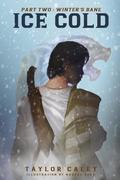
Ice Cold - Part Two: Winter's Bane (The Aeon Chronologies)
Ice Cold - Part Two: Winter's Bane (The Aeon Chronologies): ab 2.99 €- Shop: ebook.de
- Price: 2.99 EUR excl. shipping